What the Check Engine Light Actually Means
Every gasoline car sold in the US since 1996 has an onboard diagnostics system called OBD-II. It watches dozens of sensors across the engine, fuel system, and emissions equipment. When a reading falls outside the range the manufacturer programmed, usually on two trips in a row, the computer stores a trouble code and turns on the light. Engineers call it the malfunction indicator lamp. Everyone else calls it the check engine light.
The light itself tells you almost nothing. It does not say whether the problem costs $30 or $3,000, and it does not mean your engine is about to fail. Most triggers are emissions related. Some are trivial. A few get expensive quickly if you ignore them, which is why the smart move is to find out what the code says within a few days, not a few months.
Steady or Flashing: Check This First
A steady light means the computer found a fault and logged it. The car is usually safe to drive in the short term. Pay attention to how it feels: a rough idle, hesitation, a fuel smell, or a sudden drop in mileage is worth mentioning when you bring it in. Plan to get it scanned within a week.
A flashing light is different. Flashing means the engine is misfiring right now, and raw fuel is passing into the exhaust. That unburned fuel ignites inside the catalytic converter and can overheat and destroy it within a few miles. Slow down, stay off the accelerator, and pull over when it is safe. If the light keeps flashing when you restart the car, do not drive it. Have it towed instead. We offer 24/7 towing to our Hayward shop, and a tow bill is far cheaper than a new catalytic converter.
The Five Most Common Causes We See
Loose or failing gas cap. The EVAP system checks that fuel vapor stays sealed inside the tank, and a cap that is loose, cracked, or missing sets a code. Tighten it until it clicks. If the cap was the whole story, the light usually turns itself off after a few days of normal driving. A replacement cap typically costs under $40.
Oxygen sensor. O2 sensors measure the oxygen left in the exhaust so the computer can adjust the fuel mixture. A lazy or dead sensor hurts fuel economy and, left long enough, can take the catalytic converter with it. Replacement usually runs about $200-$450 depending on the vehicle and which sensor failed.
Catalytic converter. Codes P0420 and P0430 mean the converter is no longer cleaning the exhaust efficiently. Here is the part many drivers learn the hard way: a failing converter is usually collateral damage. Misfires, oil burning, and dying oxygen sensors are what kill converters. California also requires CARB-compliant replacement converters, which cost more than the parts sold in most other states, so confirming the root cause before replacing anything matters even more here.
Spark plugs and ignition coils. Worn plugs and failing coils cause misfire codes, and they are common on cars past their service interval, which ranges from about 30,000 to 100,000 miles depending on plug type. Finally, EVAP leaks beyond the gas cap: a cracked vapor hose or a stuck purge valve sets codes like P0442 or P0455. These leaks do not change how the car drives, but they will fail a smog check, and finding them takes a smoke machine, not a guess.
Why a Free Code Read Is Not a Diagnosis
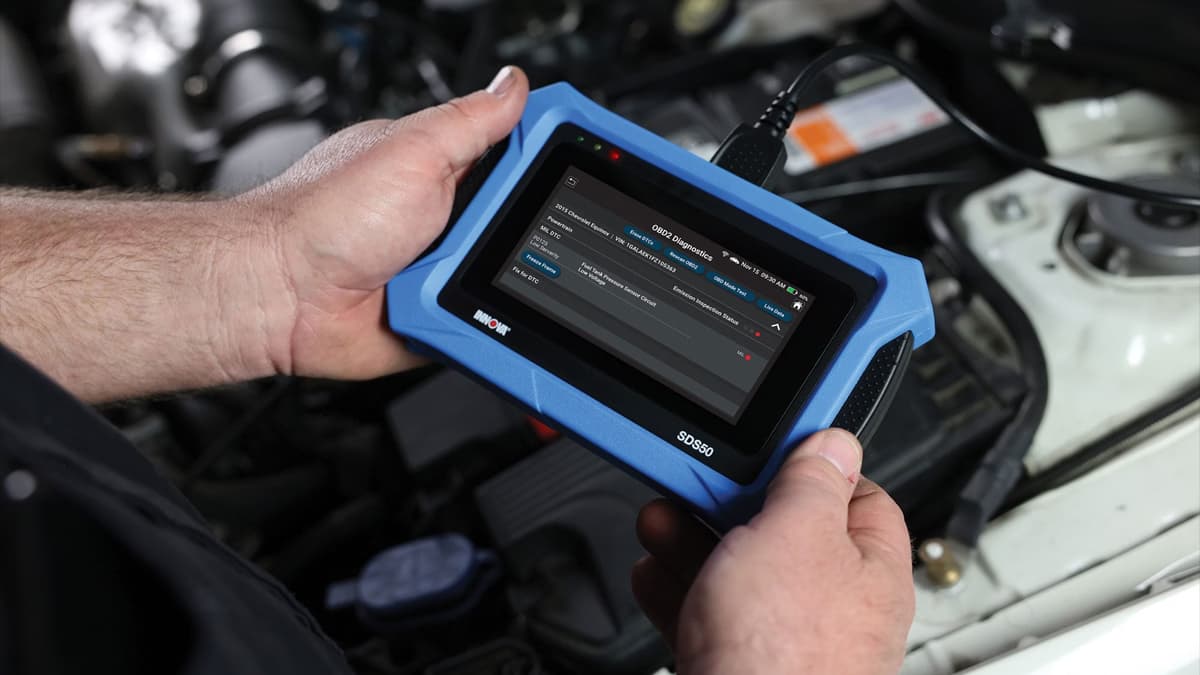
Auto parts stores will read your codes for free, and that is a fine first step. But a code is a symptom, not a verdict. P0171 says the engine is running lean. The code alone will not tell you whether the cause is a vacuum leak, a dirty airflow sensor, a weak fuel pump, or an exhaust leak upstream of the sensor. Replace parts based on the code alone and you can spend hundreds of dollars fixing nothing.
A proper diagnosis means watching live sensor data, checking fuel trims, smoke testing the intake and EVAP system, and bench testing the suspect part before replacing it. That is how our ASE-certified technicians approach engine diagnostics in Hayward: confirm the actual fault first, then put the repair in writing before any work starts. Parts we install are OEM spec or premium aftermarket, and mechanical repairs carry a 12-month / 12,000-mile parts warranty.
How the Light Affects Your California Smog Check
Most gasoline vehicles registered in California need a smog check every two years once they are eight model years old. The rule is blunt: if the check engine light is on, the vehicle automatically fails, no matter how clean the tailpipe is. An illuminated light ends the test before it really begins.
There is a second trap called readiness monitors. These are self tests the computer runs in the background while you drive. Clearing codes with a scan tool, or disconnecting the battery, wipes the monitors back to incomplete, and a car with incomplete monitors cannot pass either. For gasoline vehicles from model year 2000 and newer, California allows only the EVAP monitor to be incomplete. Everything else must show ready, and setting the monitors again takes days of mixed city and highway driving, often 100 miles or more.
So the order of operations is: fix the actual fault, drive normally for several days to a week, confirm the monitors are ready, then take the test. Clearing the code the night before does not work, and smog stations see that attempt constantly. If an emissions fault is behind your failure, our exhaust and emissions service handles the repair and gets the car ready for the retest.
When to Come In
Come in right away if the light is flashing, if it came on along with rough running, loss of power, or a fuel smell, or if your registration renewal is due in the next month or two. A steady light on a car that drives normally can wait until later in the week, but do not let it ride past your next fill-up or two. And if the light appeared after a parking lot hit or a fender bender, get it scanned. Impacts can set fault codes in systems far from the visible damage, and we handle collision and mechanical work at the same address.
The first step costs you nothing. Our current specials include a free check engine light scan: we read the codes, explain them in plain language, and tell you whether the car is safe to keep driving. If deeper testing is needed, we quote it up front before touching anything. Walk-ins are welcome Monday through Saturday, 9:30 AM to 6:00 PM, at 22101 Mission Blvd A in Hayward. Call (510) 244-7184, book an appointment online, or check the specials page for the current oil change and alignment deals while you are here.